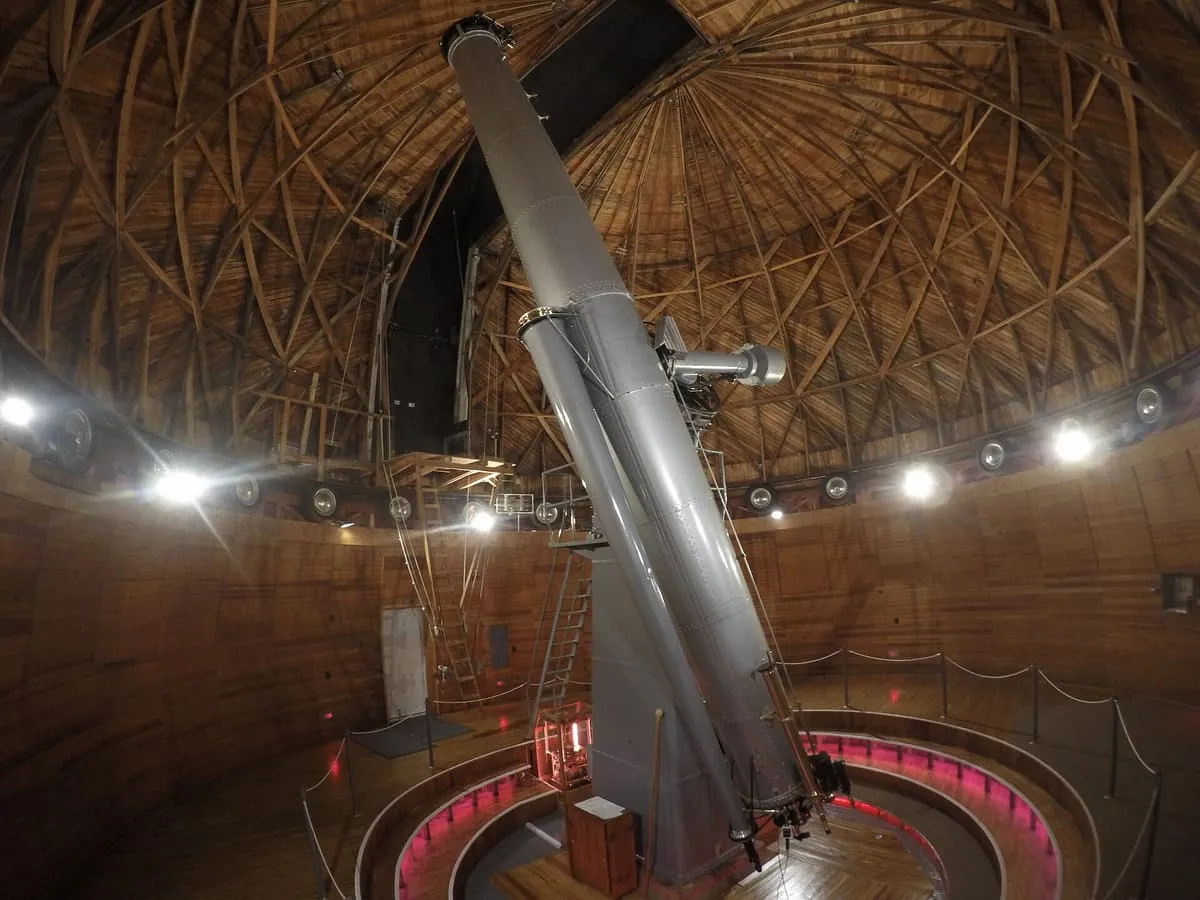
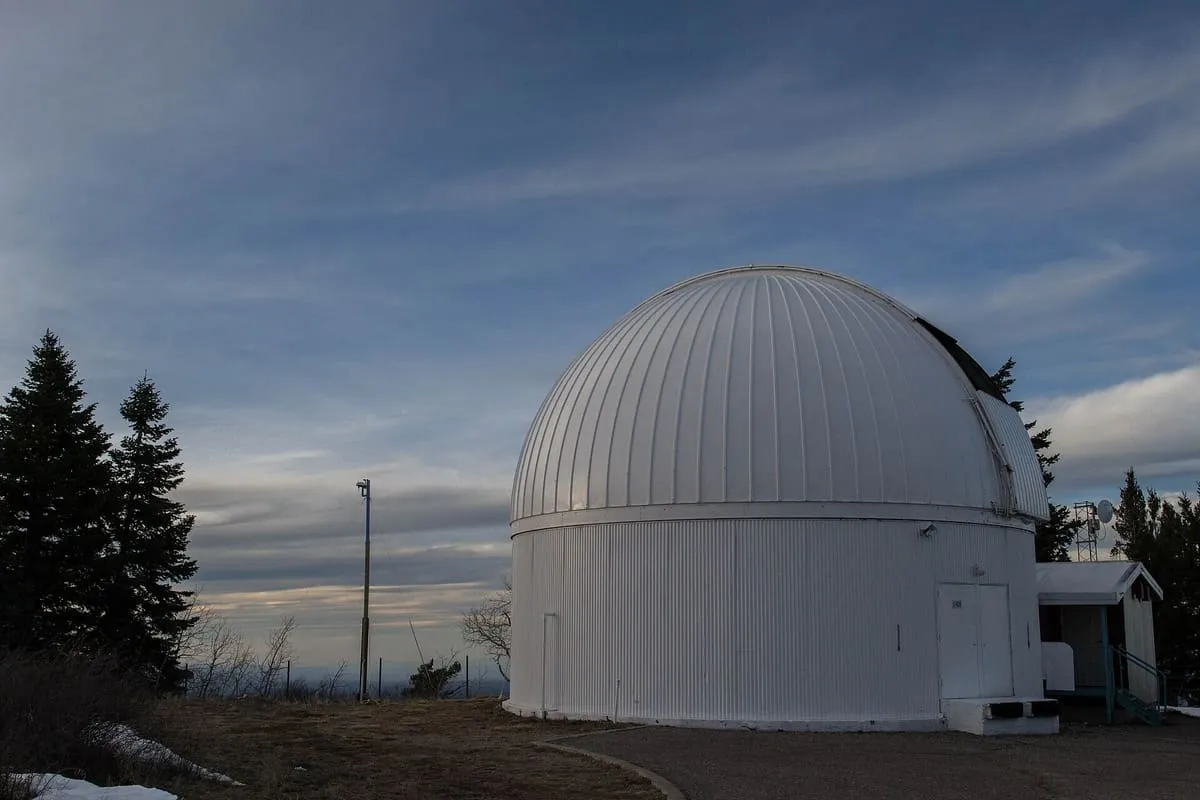
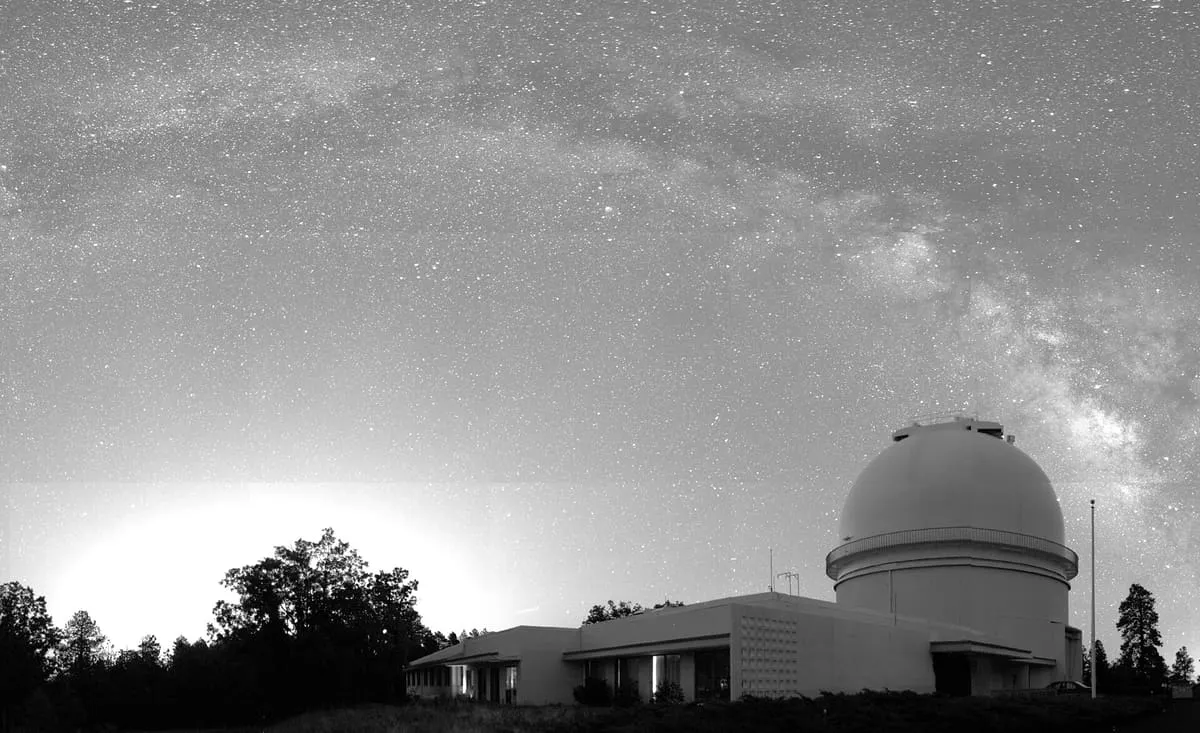
The observatory where Pluto was discovered in 1930 and where the first evidence of an expanding universe was recorded. Open to the public for daytime tours and night viewing.
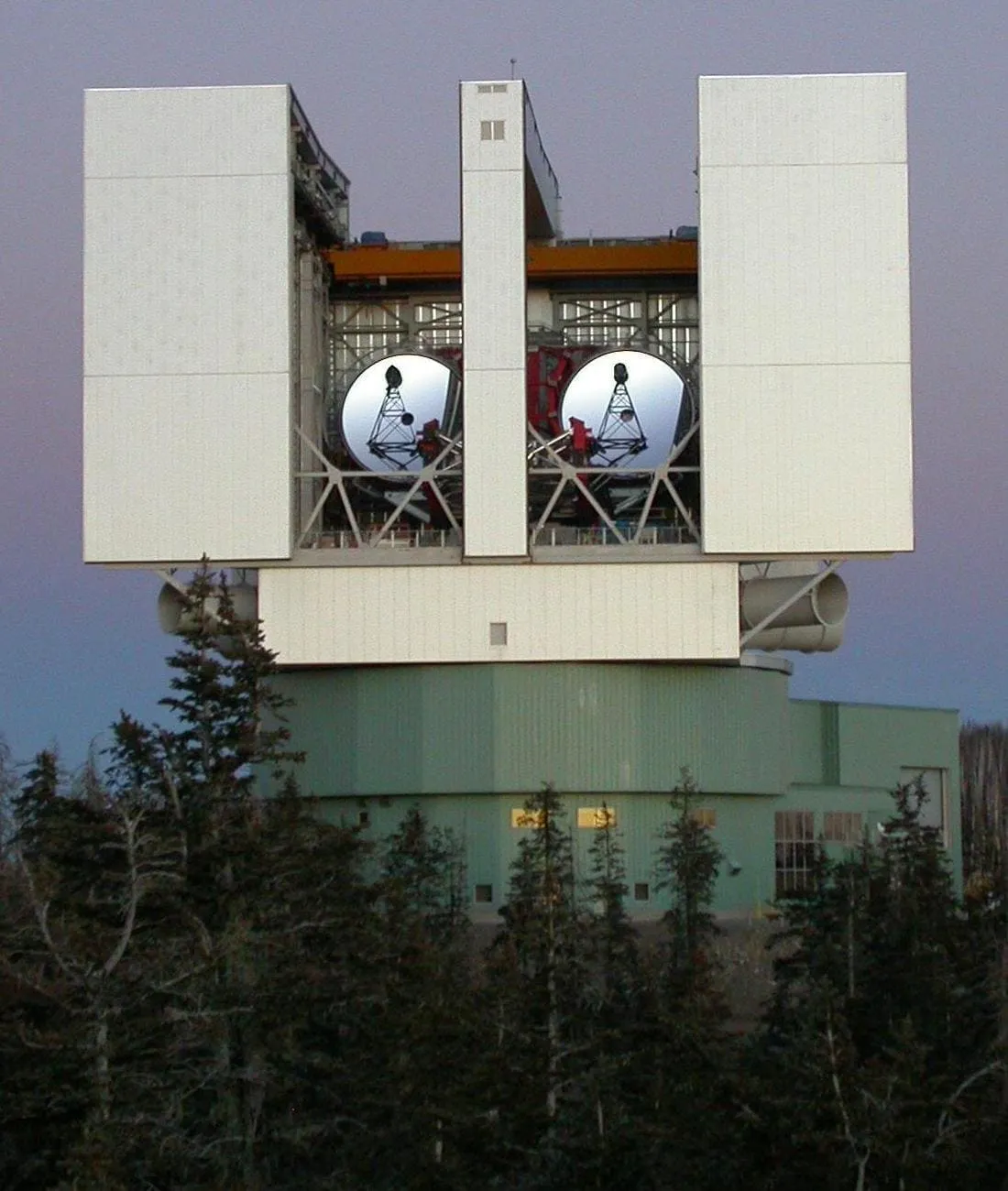
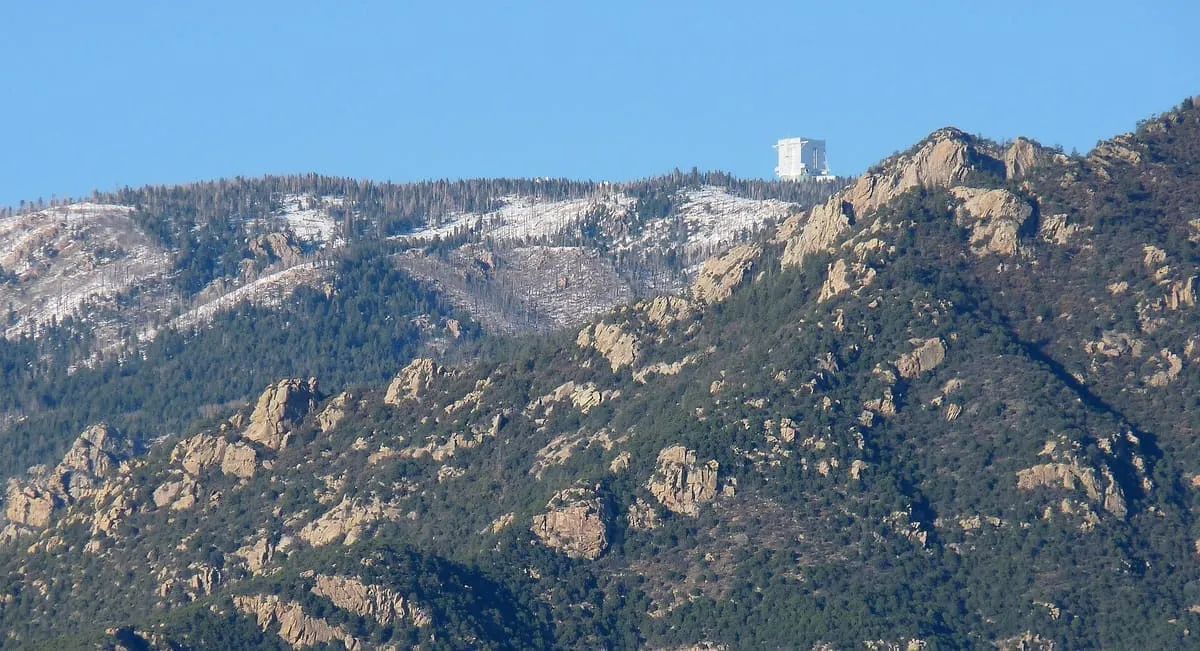
The Large Binocular Telescope (LBT) is an optical telescope for astronomy located on 10,700-foot (3,300 m) Mount Graham, in the Pinaleno Mountains of southeastern Arizona, United States. It is a part of the Mount Graham International Observatory. When using both 8.4 m (330 inch) wide mirrors, with centres 14.4 m apart, the LBT has the same light-gathering ability as an 11.8 m (464 inch) wide single circular telescope and the resolution of a 22.8 m (897 inch) wide one.
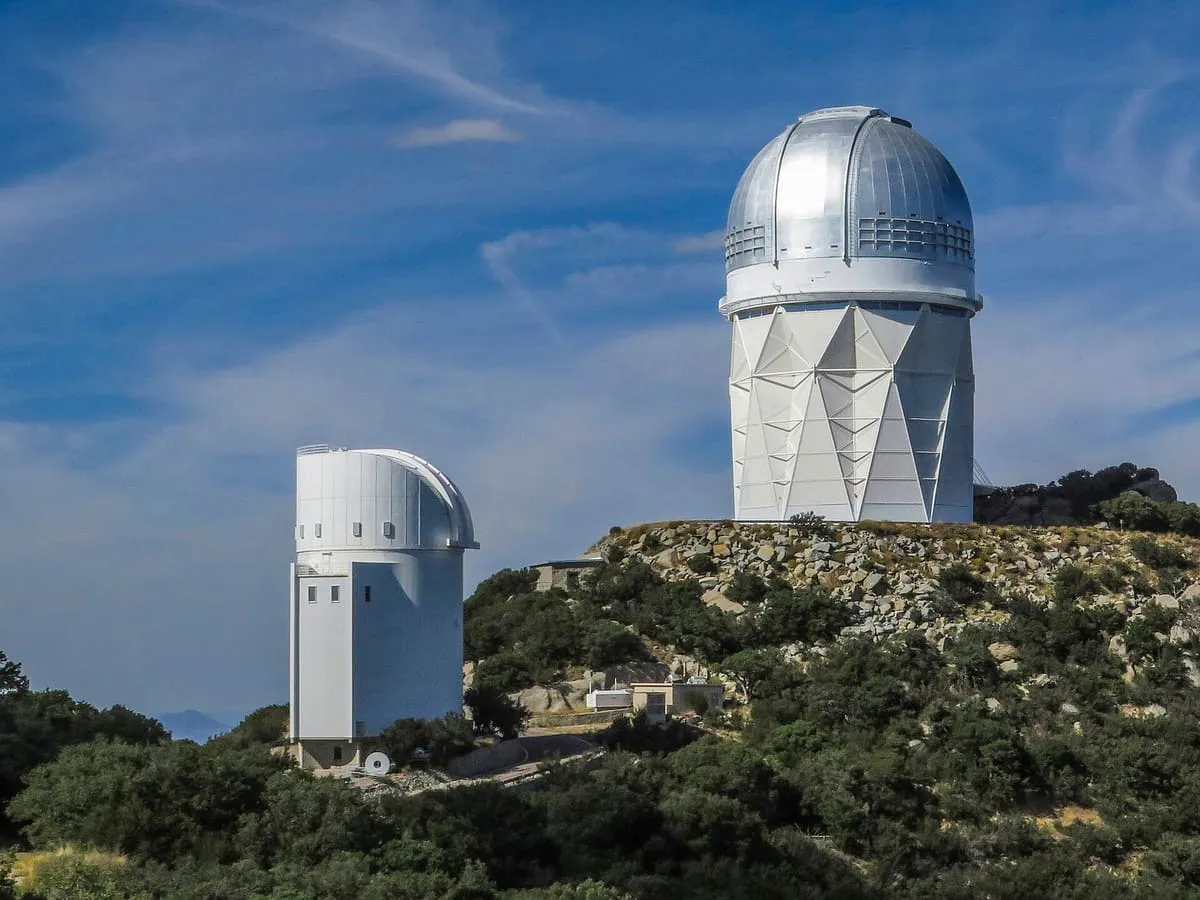
The largest collection of optical telescopes in the world, on Tohono O'odham land at 6,880 feet, hosting more than twenty telescopes operated by different institutions.
Operated by the University of Arizona in the Pinaleño Mountains west of Safford, this observatory offers periodic tours for the public. Reservations required, preferably two or more weeks in advance. Tours depart from the Discovery Park Campus.
It has a Visitor and Science Center that showcases astrophysics exhibits, views of the surrounding Santa Rita Mountains and has guided tours of the MMT Observatory. Tours mid-Mar to Nov: M W F begin at 9AM and return at 3PM. $10 for adults and children aged 13+, $5 for children aged 6-12. Advance reservations are required. Tours are suspended due to COVID19 as of Dec 2021.
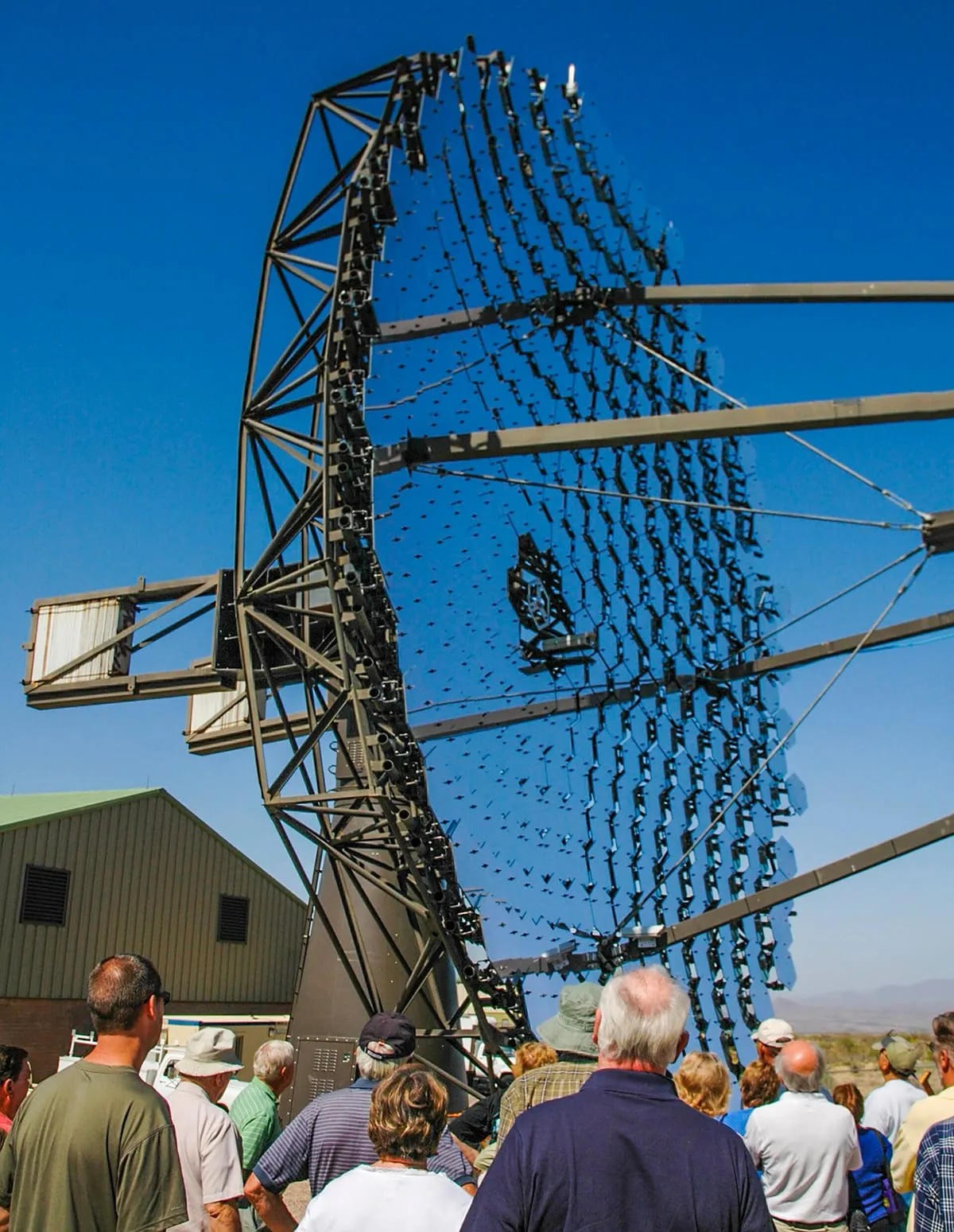
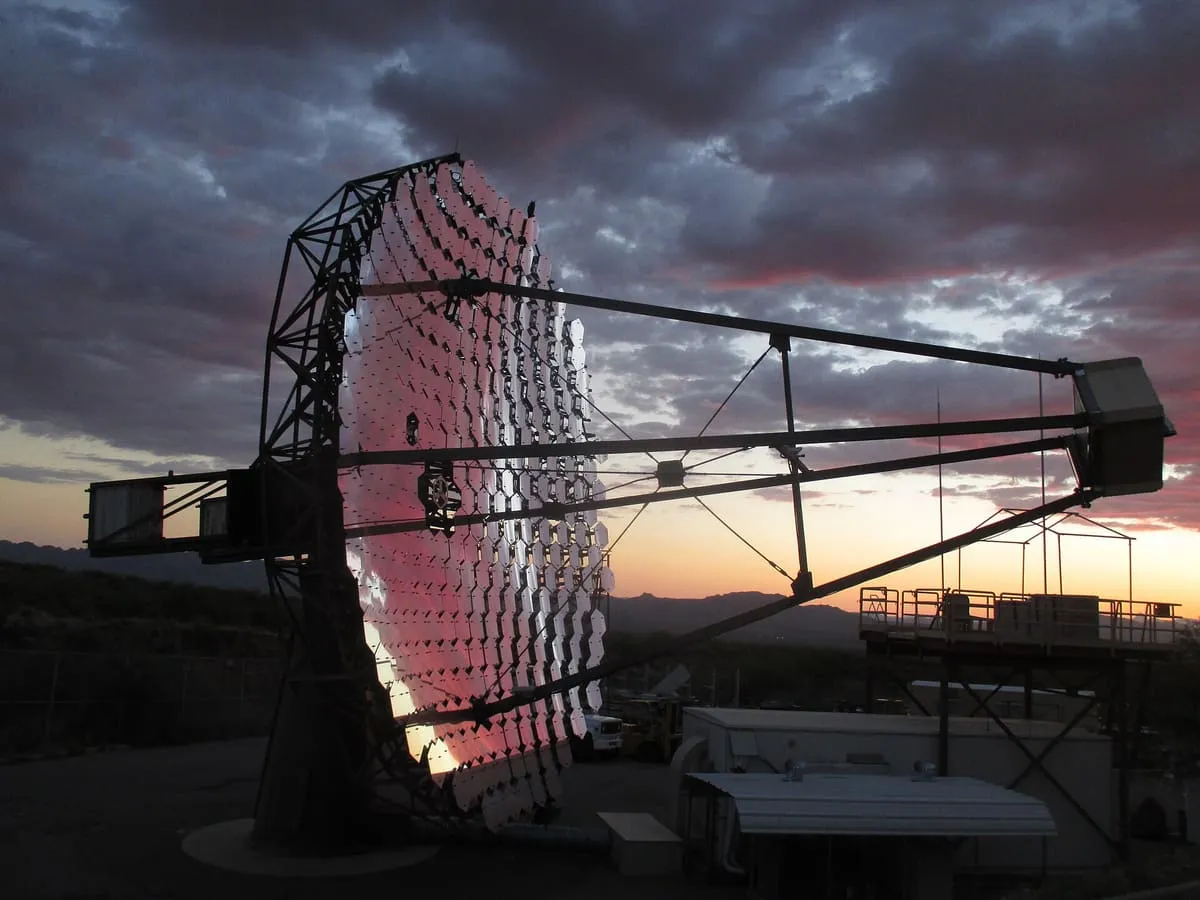
VERITAS (Very Energetic Radiation Imaging Telescope Array System) is a major ground-based gamma-ray observatory with an array of four 12 meter optical reflectors for gamma-ray astronomy in the GeV – TeV photon energy range. VERITAS uses the Imaging Atmospheric Cherenkov Telescope technique to observe gamma rays that cause particle showers in Earth's atmosphere that are known as extensive air showers. The VERITAS array is located at the Fred Lawrence Whipple Observatory, in southern Arizona, United States.
The United States Naval Observatory Flagstaff Station (NOFS), is an astronomical observatory near Flagstaff, Arizona, US. It is the national dark-sky observing facility under the United States Naval Observatory (USNO). NOFS and USNO combine as the Celestial Reference Frame manager for the U.S.
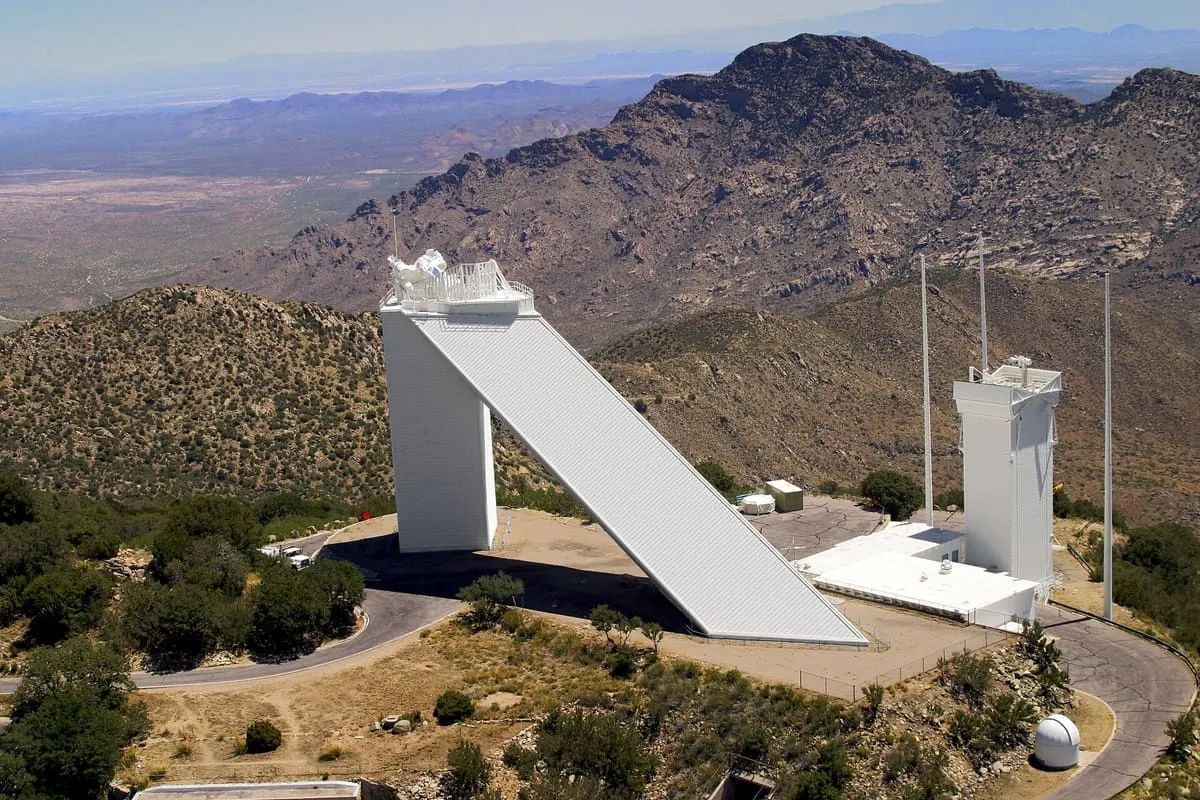
McMath–Pierce solar telescope is a 1.6 m f/54 reflecting solar telescope at Kitt Peak National Observatory in Arizona, United States. Built in 1962, the building was designed by American architect Myron Goldsmith and Bangladeshi-American structural engineer Fazlur Rahman Khan. It was the largest solar telescope and the largest unobstructed aperture optical telescope in the world.
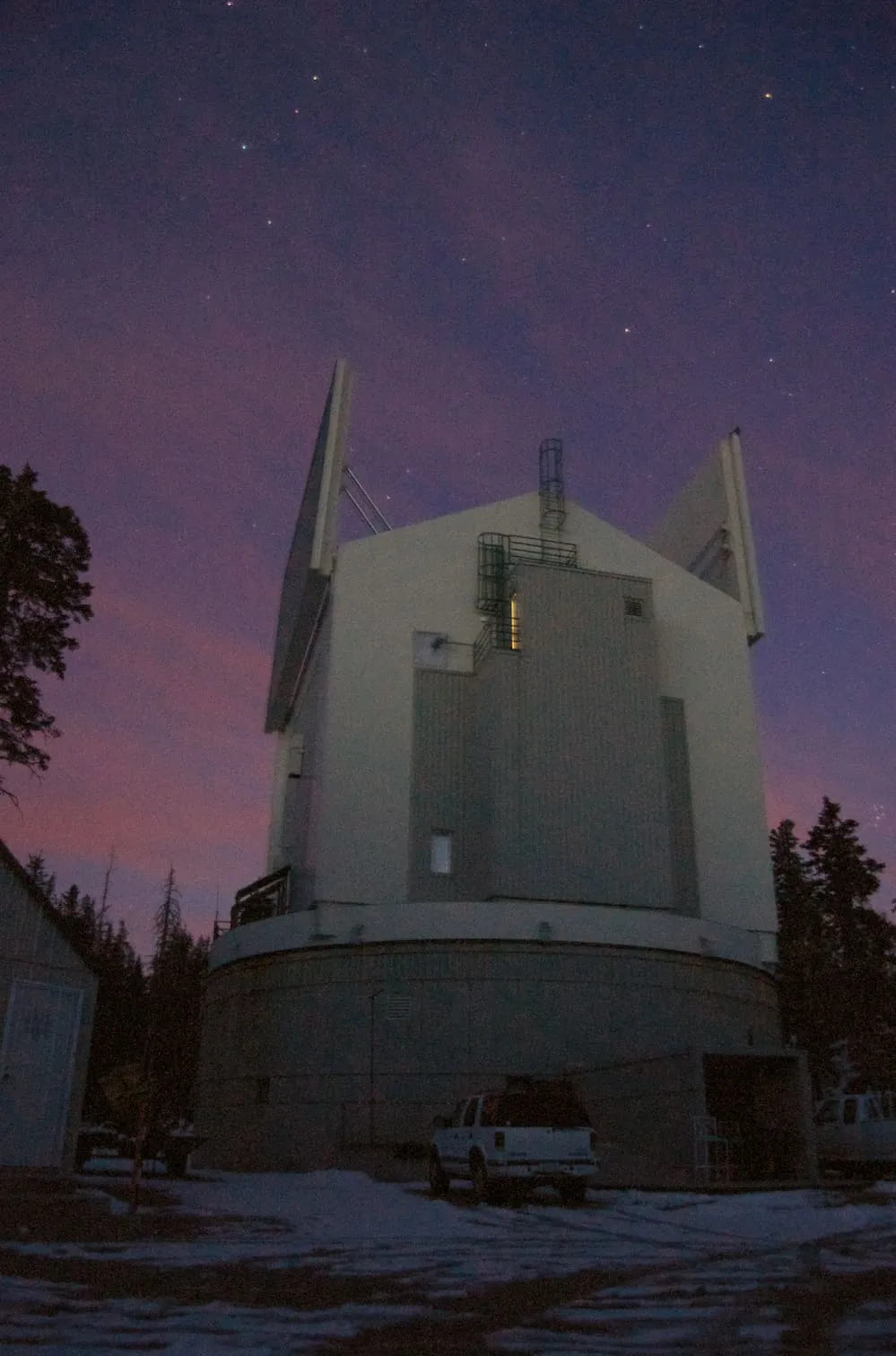
The Nicholas U. Mayall Telescope, also known as the Mayall 4-meter Telescope, is a four-meter (158 inches) reflector telescope located at the Kitt Peak National Observatory in Arizona and named after Nicholas U. Mayall.
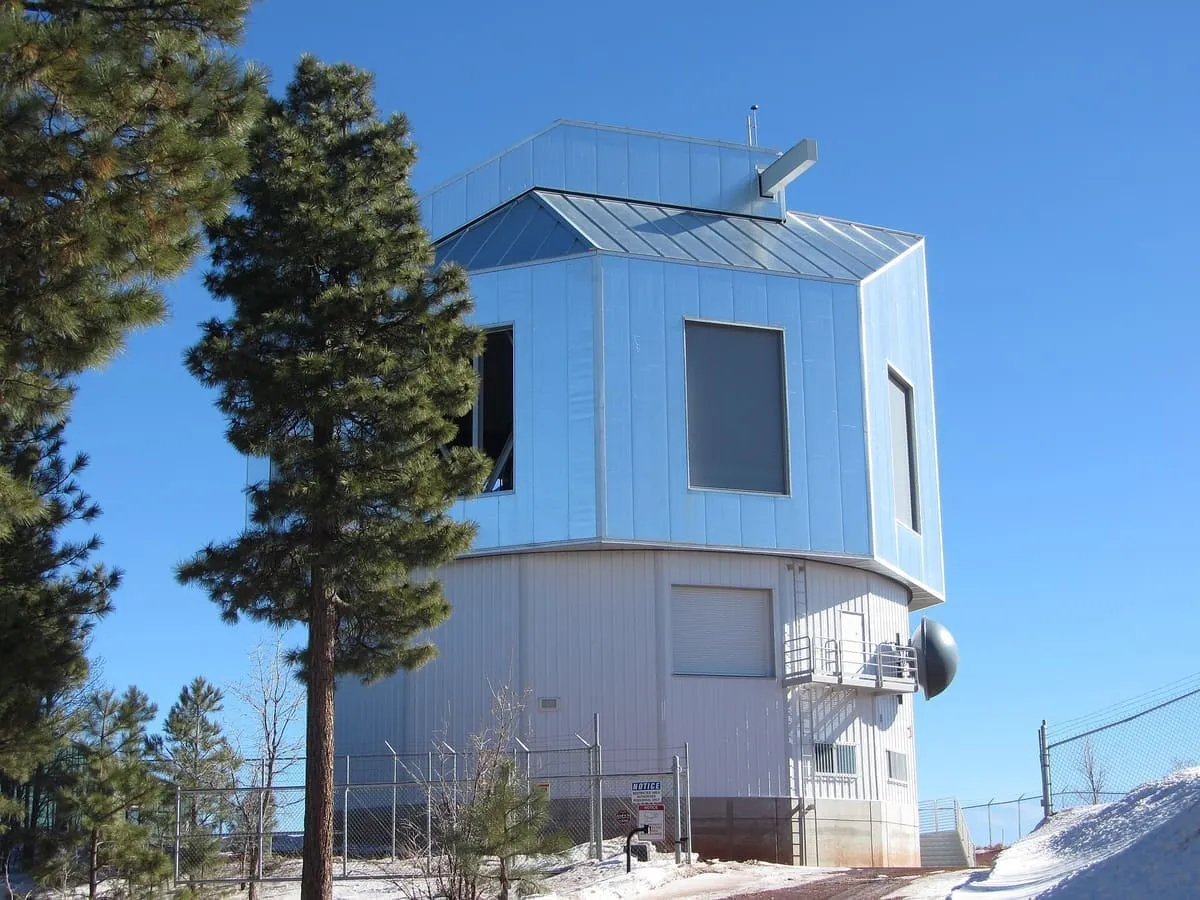
The Lowell Discovery Telescope (LDT), formerly the Discovery Channel Telescope (DCT), is a 4.3 m (170 in) aperture telescope owned and operated by Lowell Observatory. The LDT was built at a dark sky site in the Coconino National Forest near Happy Jack, Arizona. Happy Jack is located at an elevation of 2,360 m (7,740 ft) and is approximately 65 km (40 mi) south-south-east of Flagstaff.
The Submillimeter Telescope (SMT), formerly known as the Heinrich Hertz Submillimeter Telescope, is a submillimeter wavelength radio telescope located on Mount Graham, Arizona, US. It is a 10-meter-wide parabolic dish inside a building to protect it from bad weather. The building front doors and roof are opened when the telescope is in use.
How this category is scored
Every attraction in this category starts from a significance baseline of 52 out of 100, before any designations it holds are added. The full table is on the methodology page.
None of these publish an official visitor count, so they are ranked on public interest and tourism significance, and none can reach the top score band.