0.5 miles away
Hidden Bridge Arch
Hidden Bridge Arch is a rock formation in Monument Valley, Navajo County, Arizona, south of the formations known as Big Hogan and Sun's Eye.
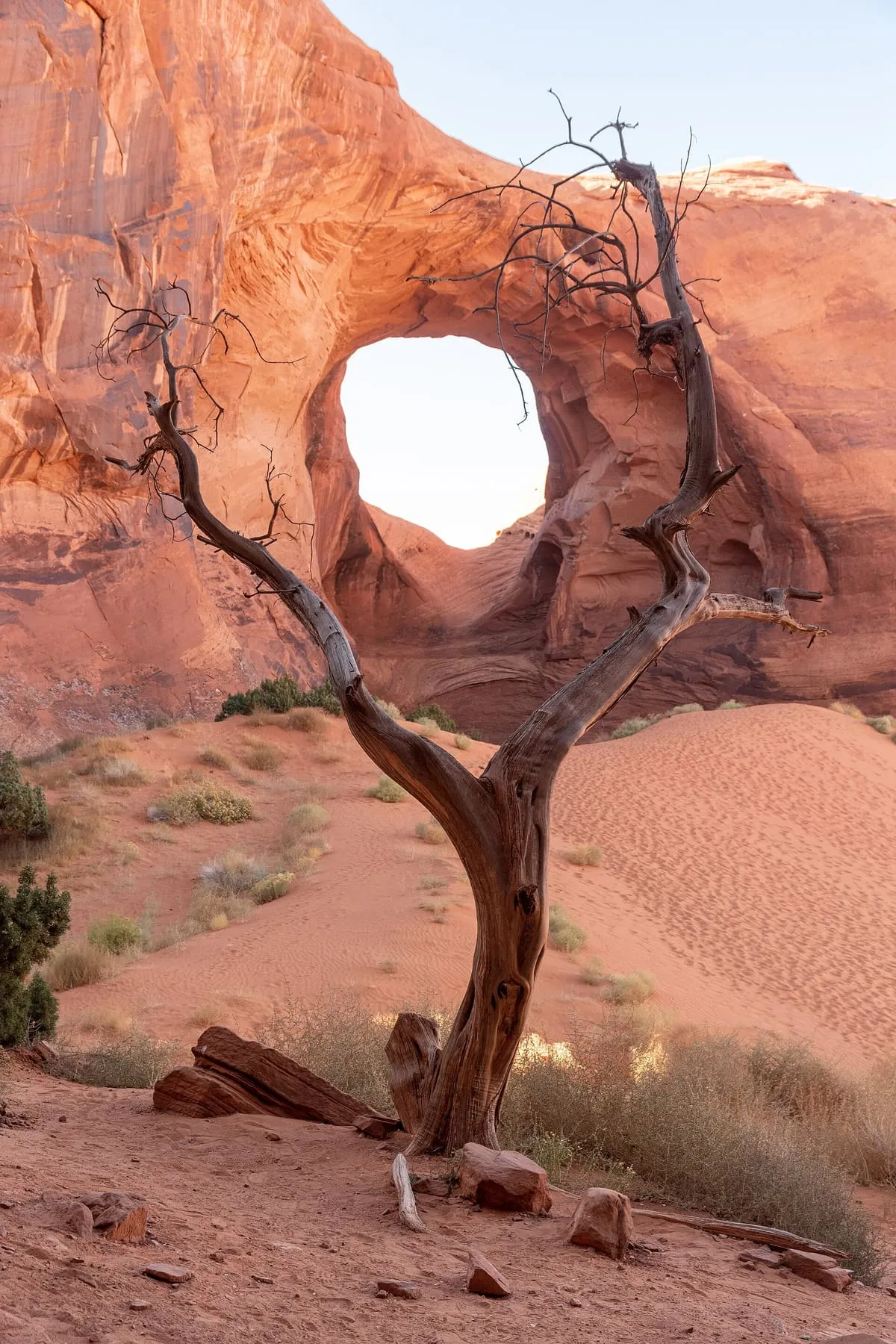
Ear of the Wind is a rock arch in Monument Valley, Navajo County, Arizona, standing directly beside a sand dune.
Ear of the Wind is a rock arch in Monument Valley, Navajo County, Arizona, standing beside a sand dune.
Ear of the Wind is a natural landmark near Monument Valley, in Navajo County. It is one of the natural landmarks in this database, and appears in the statewide ranking of Arizona attractions.
No official visitor count is published for Ear of the Wind, so its score rests on public interest and tourism significance, and is capped below the level a measured attraction can reach. That is why the low confidence above is not higher. The weighting is explained in full on the methodology page, and every axis is broken out under Facts and sources at the foot of this page.
Note on the data: No official visitor count is published for this attraction.
Record last verified 2026-08-12.
0.5 miles away
0.5 miles away
0.5 miles away
1.1 miles away
1.2 miles away

1.3 miles away