0.7 miles away
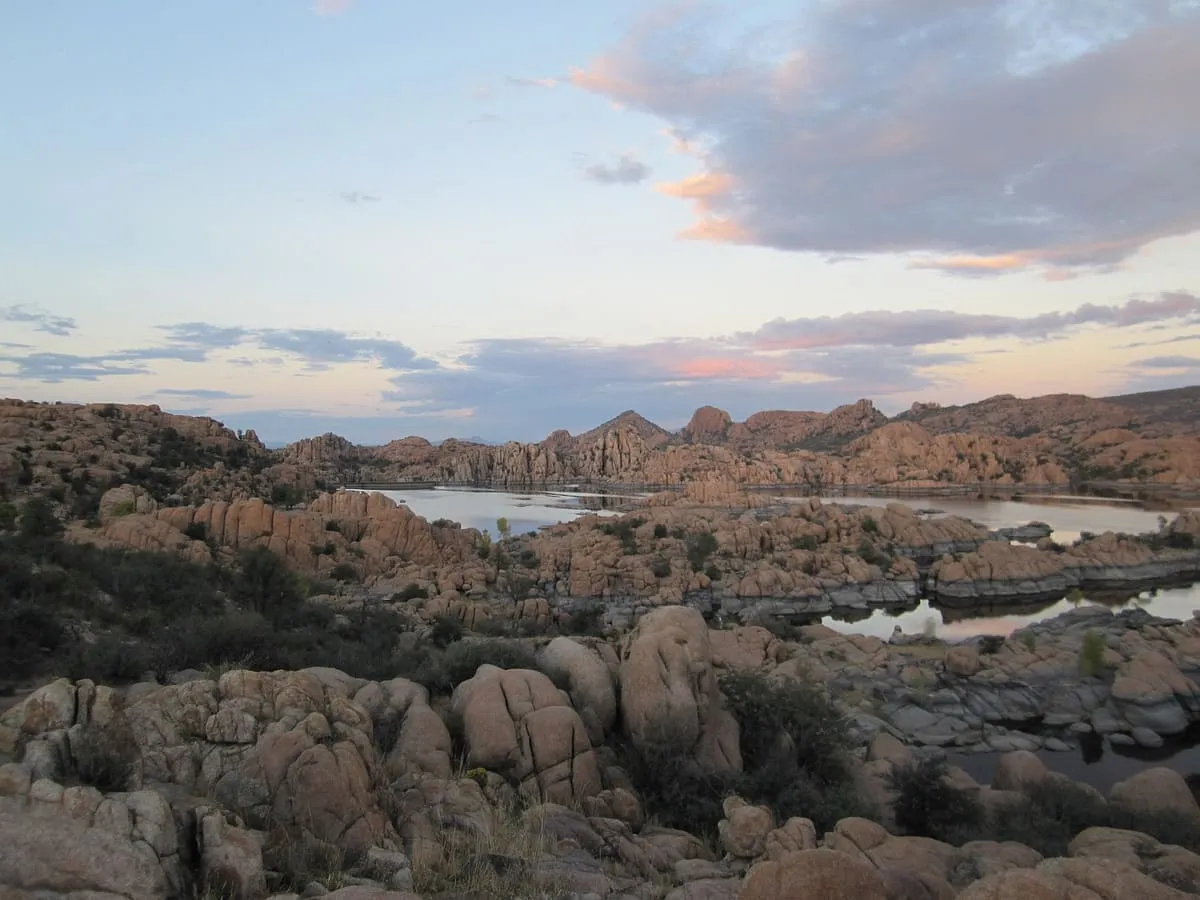
Granite Dells
Exposed granite bedrock and boulders north of Prescott, eroded into a rippled form and holding Watson and Willow lakes.
The Phippen Museum of Western Art, in Prescott, Arizona, is named after artist George Phippen and hosts exhibits of western art.
The Phippen Museum of Western Art is a museum in Prescott, Yavapai County, Arizona, named after the local artist George Phippen. It hosts exhibits of western art.
The Phippen Museum of Western Art is a museum near Prescott, in Yavapai County. It is one of the museums in this database, and appears in the statewide ranking of Arizona attractions.
No official visitor count is published for The Phippen Museum of Western Art, so its score rests on public interest and tourism significance, and is capped below the level a measured attraction can reach. That is why the low confidence above is not higher. The weighting is explained in full on the methodology page, and every axis is broken out under Facts and sources at the foot of this page.
Note on the data: No official visitor count is published for this attraction.
Record last verified 2026-08-12.
0.7 miles away
1.3 miles away
2.5 miles away
3.6 miles away
5.0 miles away
5.8 miles away