4.6 miles away
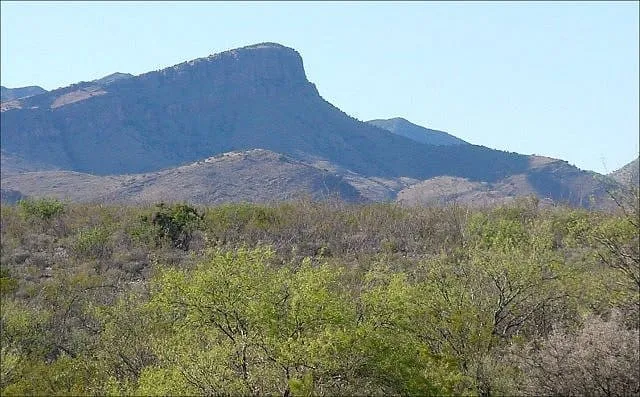
Whetstone Mountains
A range in south-eastern Arizona named in 1859 for its novaculite, a fine-grained rock used to sharpen tools.
A spring in the Whetstone Mountains where Wyatt Earp killed William "Curly Bill" Brocius in March 1882, later mapped as Mescal Springs.
Iron Springs is the historical name of a natural spring in the Whetstone Mountains of south-eastern Arizona. It is known as the site of a confrontation between Wyatt Earp and William "Curly Bill" Brocius on 24 March 1882, in which Brocius was killed. The place was called Iron Springs at that time; later maps give the name as Mescal Springs.
Iron Springs (Cochise County, Arizona) is a natural landmark near Benson, in Cochise County. It is one of the natural landmarks in this database, and appears in the statewide ranking of Arizona attractions.
No official visitor count is published for Iron Springs (Cochise County, Arizona), so its score rests on public interest and tourism significance, and is capped below the level a measured attraction can reach. That is why the medium confidence above is not higher. The weighting is explained in full on the methodology page, and every axis is broken out under Facts and sources at the foot of this page.
Note on the data: No official visitor count is published for this attraction.
Record last verified 2026-08-12.
4.6 miles away
5.6 miles away
7.6 miles away
8.0 miles away
13 miles away
13 miles away