Score 45.9 out of 100
Landmark
Sloan Park
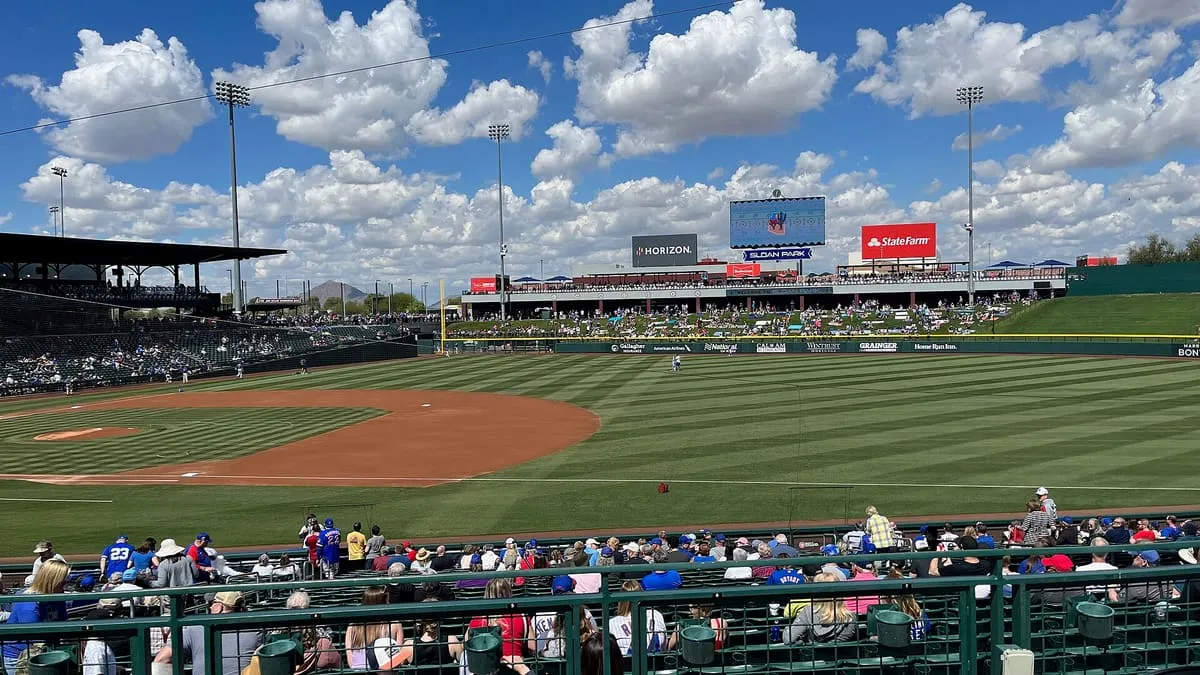
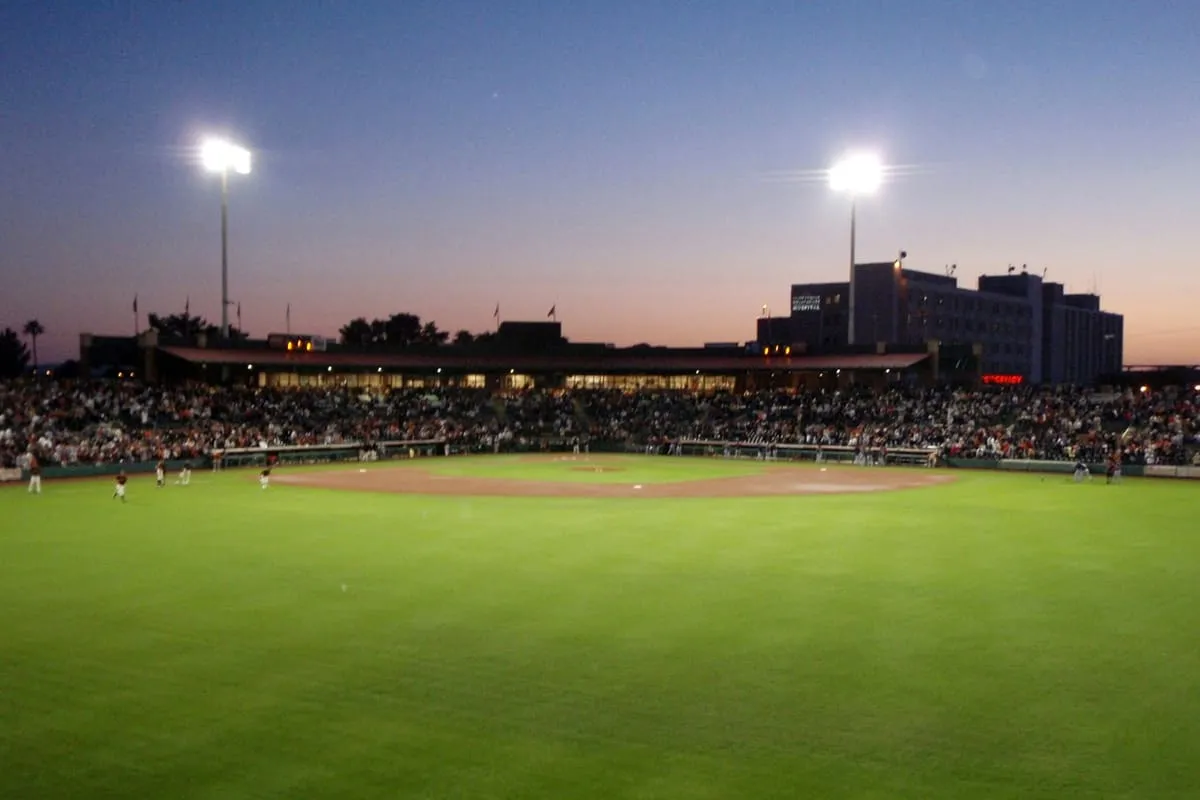
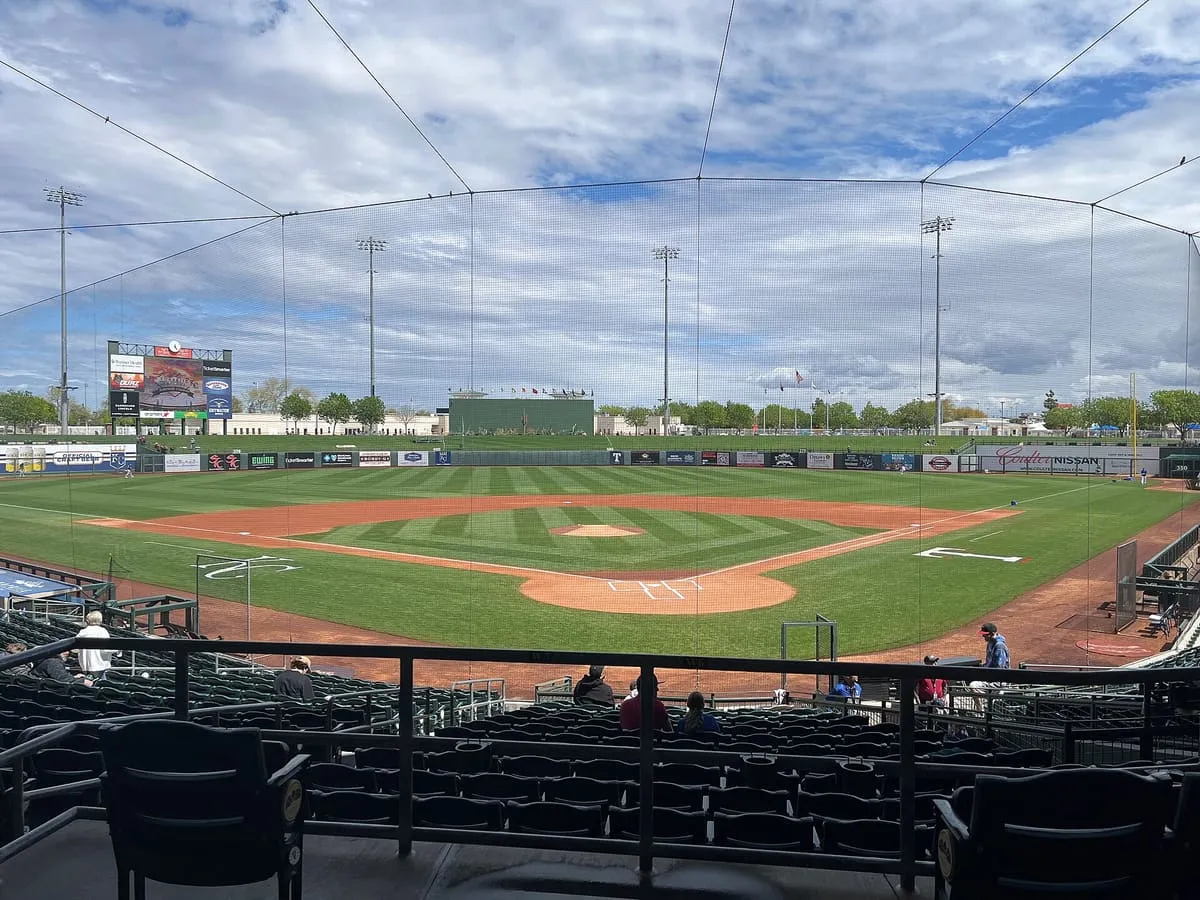
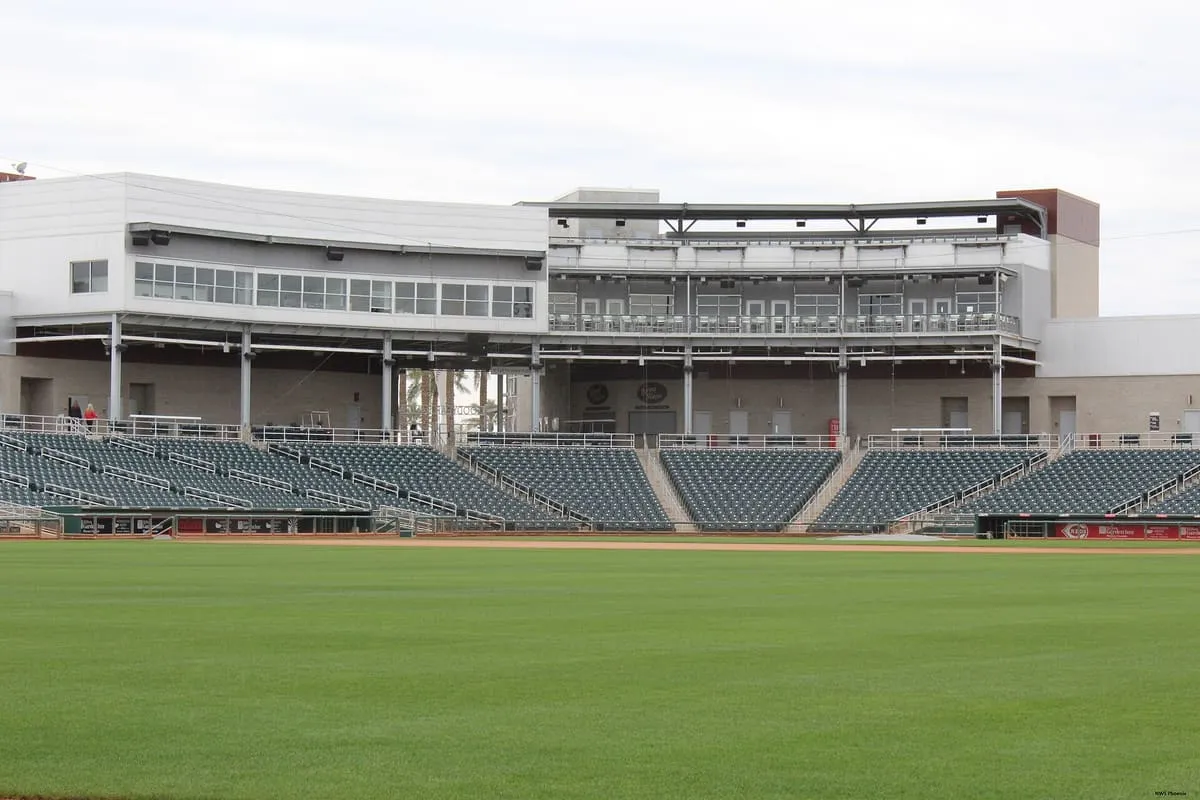
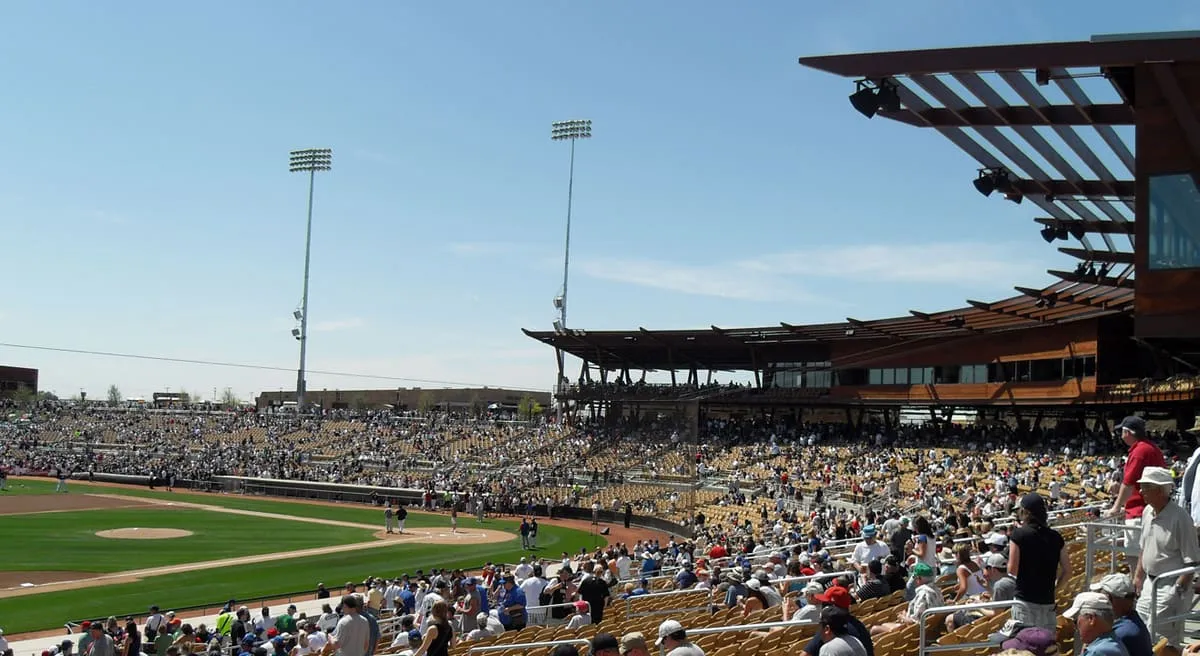
The Chicago Cubs' spring training park in Mesa, opened in 2014 and, at 15,000 seats, the largest in Major League Baseball.
Articles
Readership of Sloan Park runs 3.8 times its annual average in March, the largest seasonal peak measured across 467 Arizona attractions.
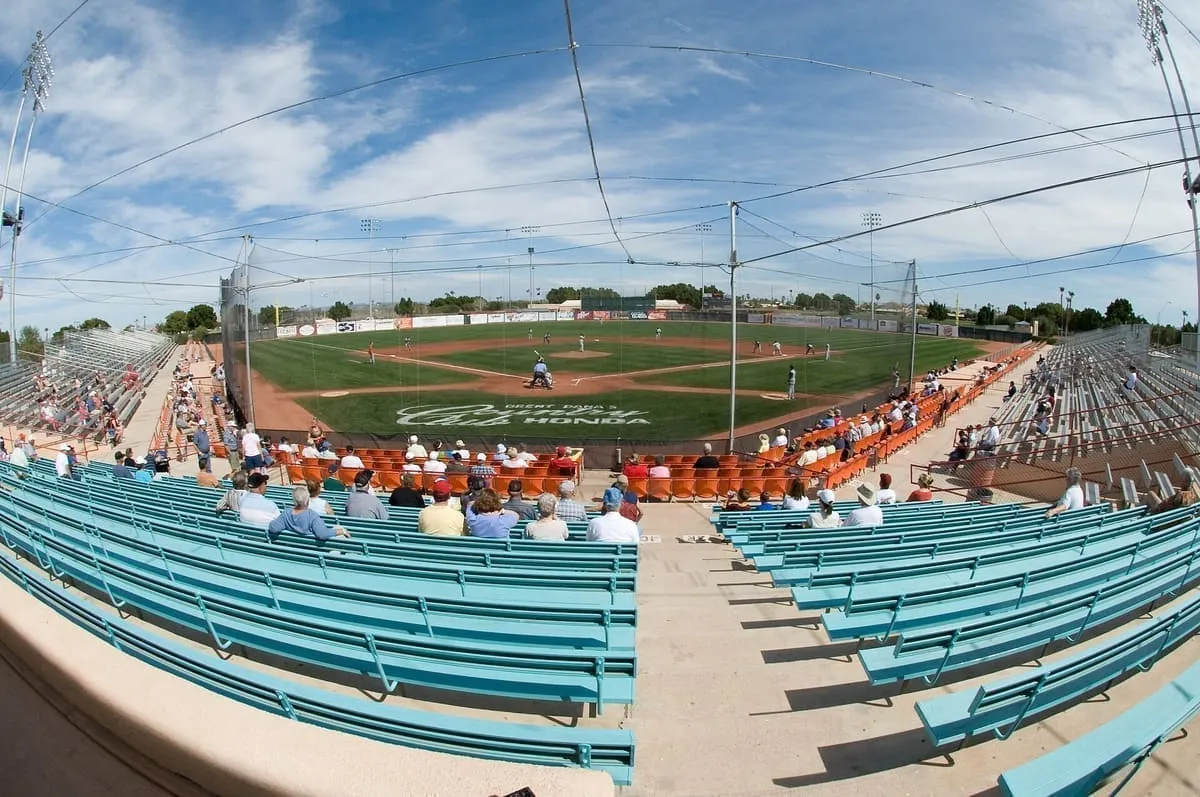
Ten Major League Baseball spring training venues appear in this database, and all ten are in Maricopa County. Between them they house fifteen clubs — several of the grounds are shared — and they are the reason March behaves differently from every other month in Arizona’s measured readership.
This site records, for each attraction with enough Wikipedia readership to carry a shape, which month of the year that readership concentrates in. The measure is an index in which 1.0 is an even twelfth of the year, taken as a median across whole years so that a single anomalous month cannot manufacture a season. Of the records with a measurable peak, 188 peak in March, more than any other month. Thirteen records reach an index of 2.0 or above in March, and eight of the thirteen are baseball grounds.
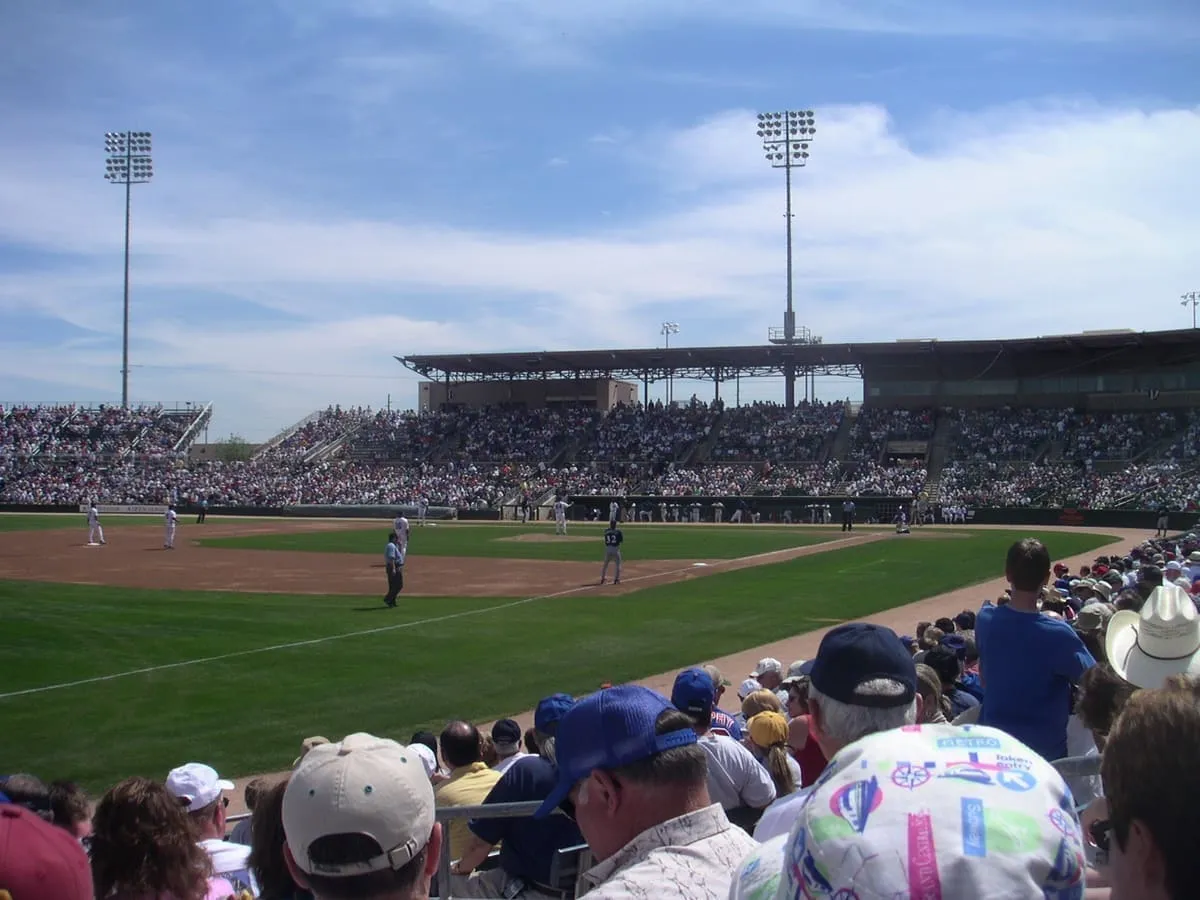
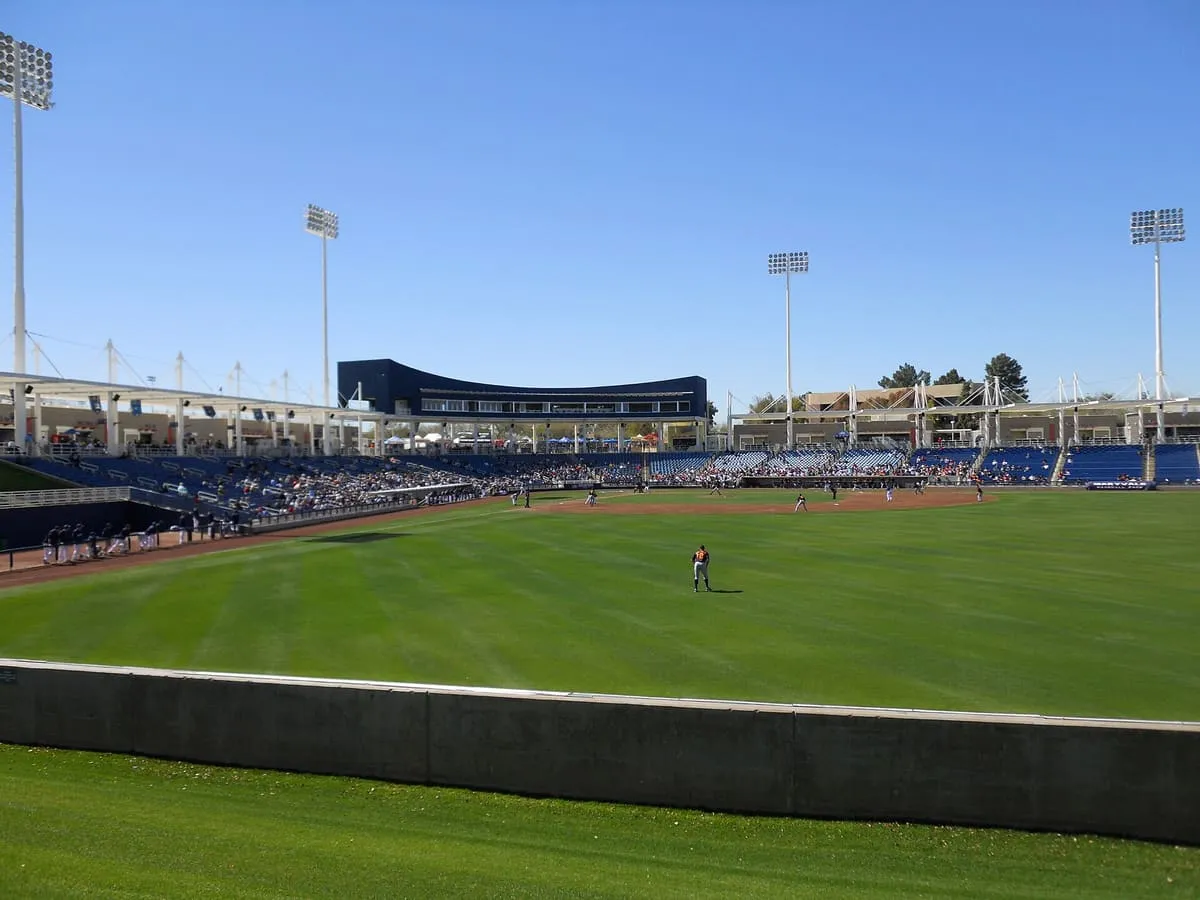
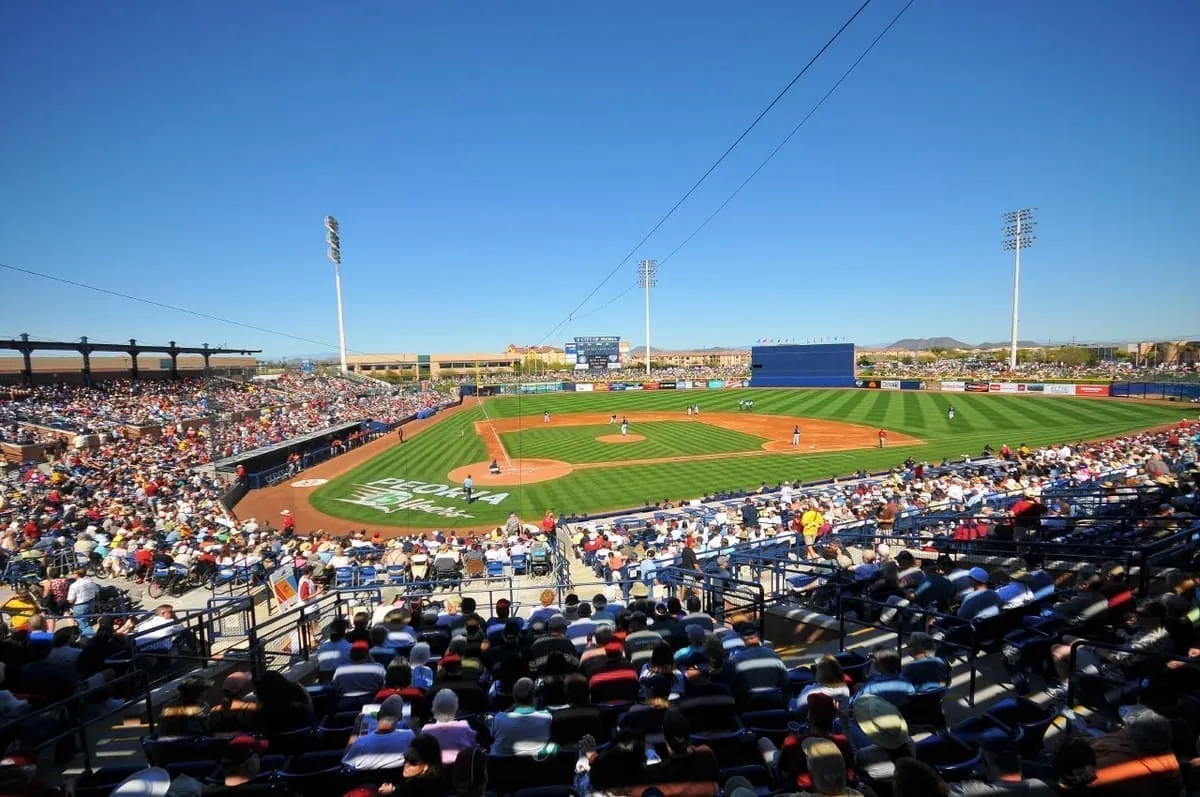
Sloan Park in Mesa reaches an index of 3.76 in March — its readership in that month runs nearly four times an average month’s share — and it does so in all three years compared. Hohokam Stadium, a mile away and the Cubs’ previous home, reaches 3.61. American Family Fields of Phoenix reaches 3.29 and Tempe Diablo Stadium 3.14. Scottsdale Stadium reaches 2.73, Surprise Stadium 2.68, Peoria Sports Complex 2.54 and Goodyear Ballpark 2.52. Every one of those eight agrees across all three years measured.
For comparison, the threshold at which this site is willing to call a place seasonal at all is 1.45, and it was set from the distribution rather than chosen: most Arizona attractions show a mild lift in the months when the desert is not 43 degrees, and that lift is a fact about the state rather than about the place. The ballparks are not a lift. They are a different order of figure.
Camelback Ranch in Glendale, the spring training home of the Dodgers and the White Sox, peaks in February at 3.23, again across all three years. Spring training camps open before the exhibition games begin, and Camelback Ranch is the one venue in the group whose readership records that earlier date rather than the playing schedule.
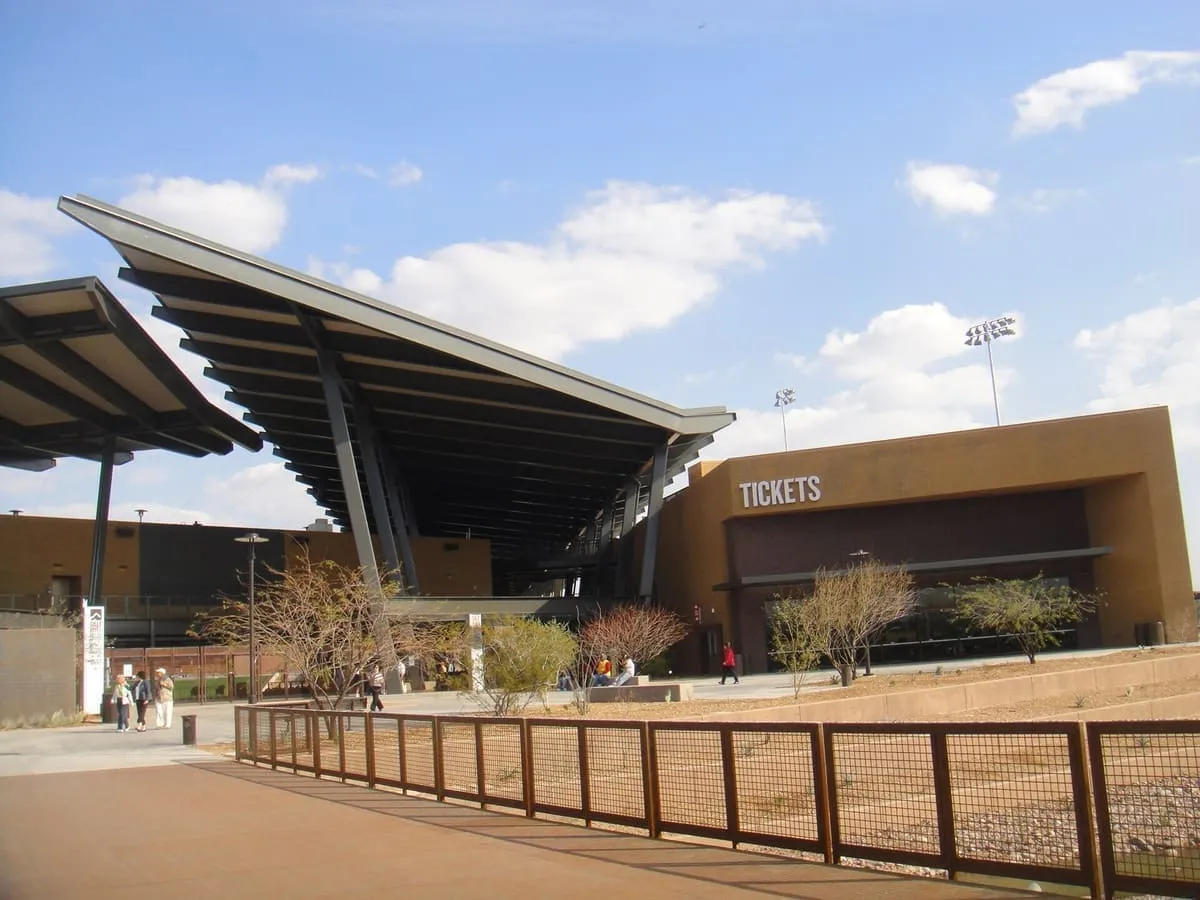
Salt River Fields at Talking Stick, which houses the Diamondbacks and the Rockies and was the first Major League ballpark built on Native American land, carries no seasonal figure. Its readership across the compared years is too thin to support one.
This is worth stating plainly rather than leaving as a gap in a table. The absence is a property of the encyclopaedia, not of the ballpark: a venue can draw well and still have a short Wikipedia article that few people read. The same caution applies throughout — what is measured here is how often a place is looked up, not how many people go.
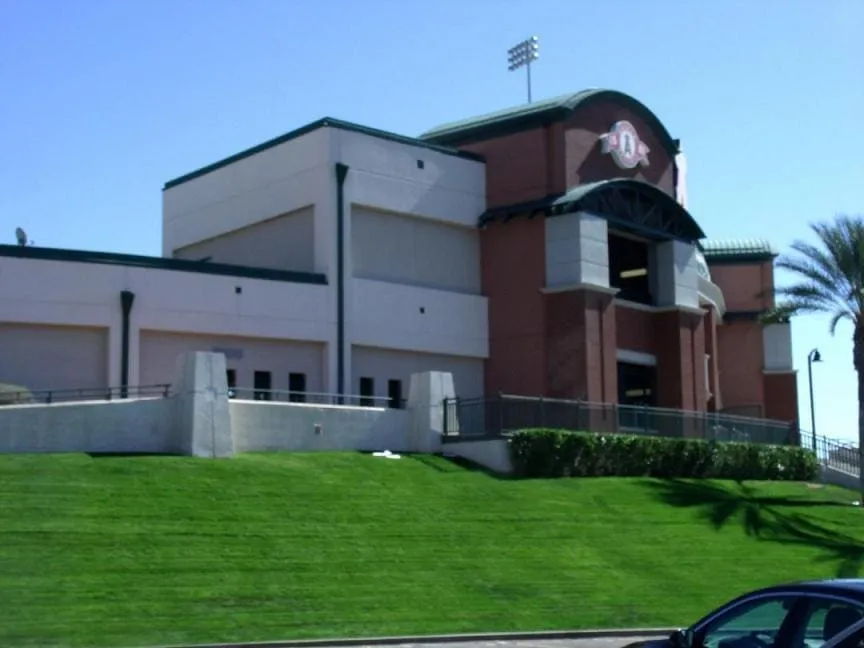
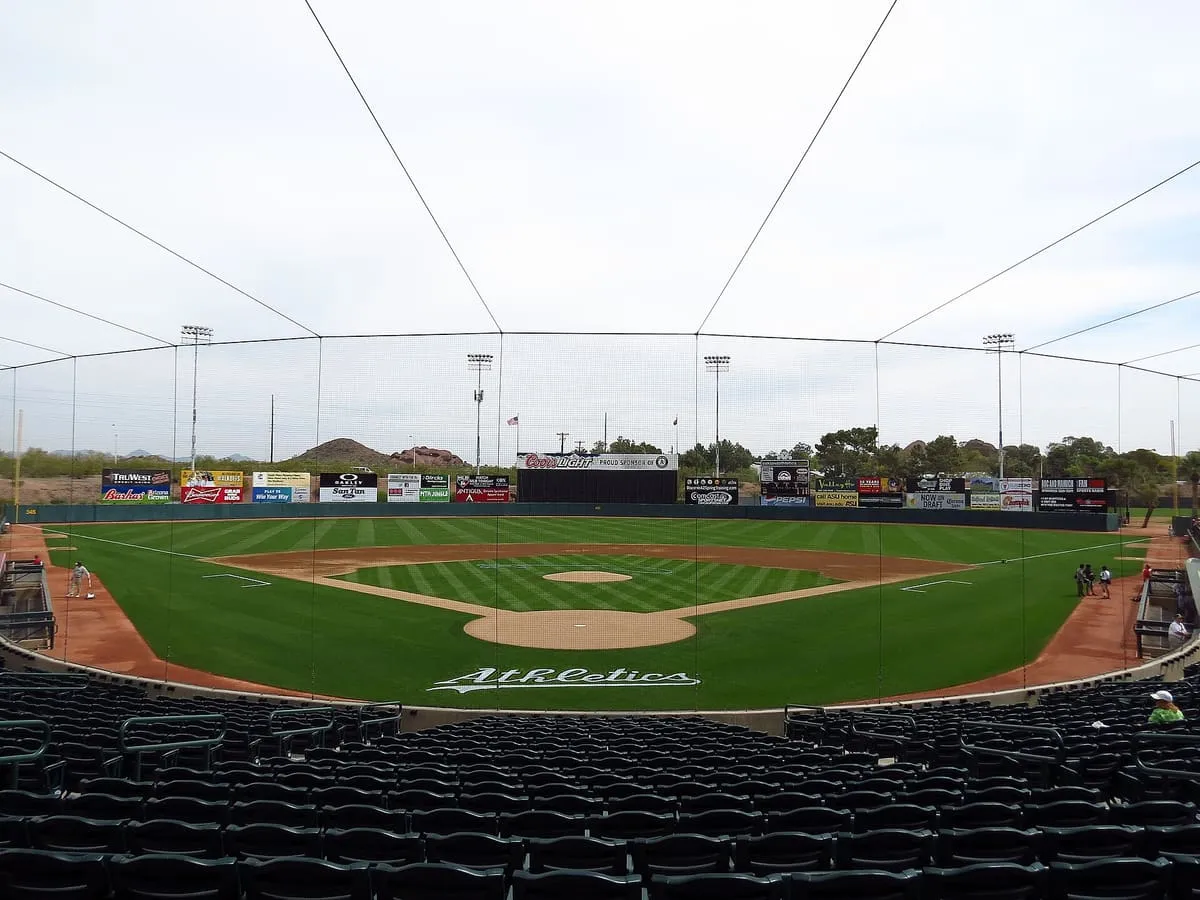
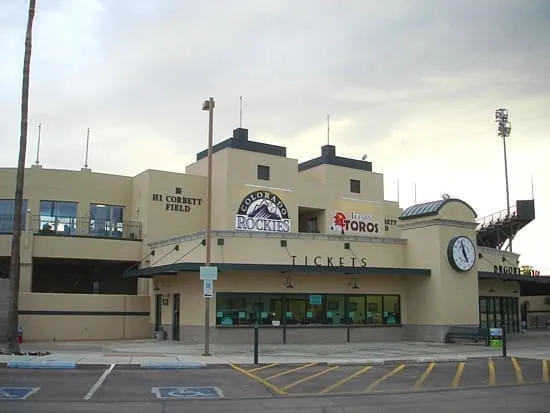
The measurement decays when the fixture does. Phoenix Municipal Stadium was the spring home of the Giants from 1964 to 1981 and of the Athletics from 1982 to 2014; it has been Arizona State University’s ground since 2015, and its March index is 1.69, agreeing in two years of three. Hi Corbett Field in Tucson, formerly the Rockies’ and the Indians’ spring ground and now the University of Arizona’s, sits at 1.81 on the same two-of-three agreement.
Desert Sun Stadium in Yuma, built for the 1970 spring training season and the Padres’ home until 1993, carries no seasonal shape at all. It was converted to a soccer ground in 2015.
Both surviving figures are still above the seasonal threshold, and both are roughly half the size of the active venues’ peaks. College baseball runs to a spring calendar too, so the residue is not evidence of remembered spring training. It is evidence that the ground is still used in spring.
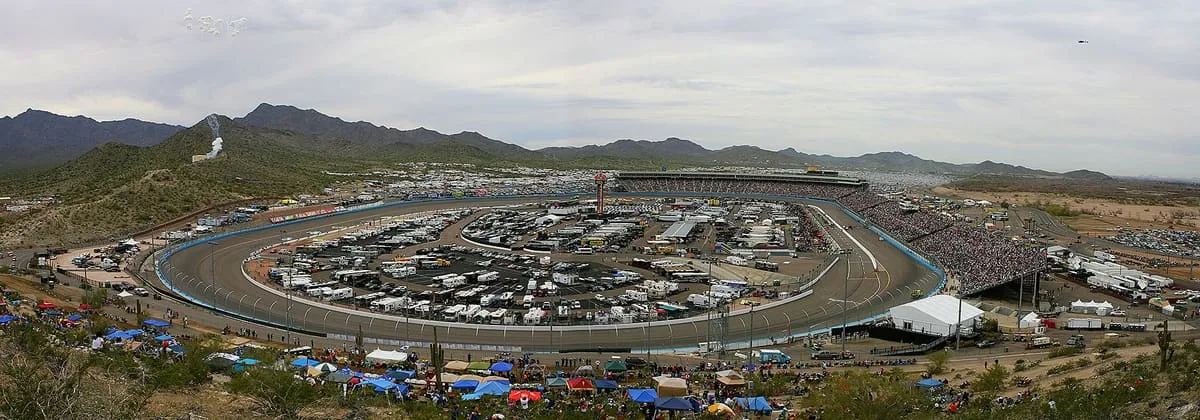
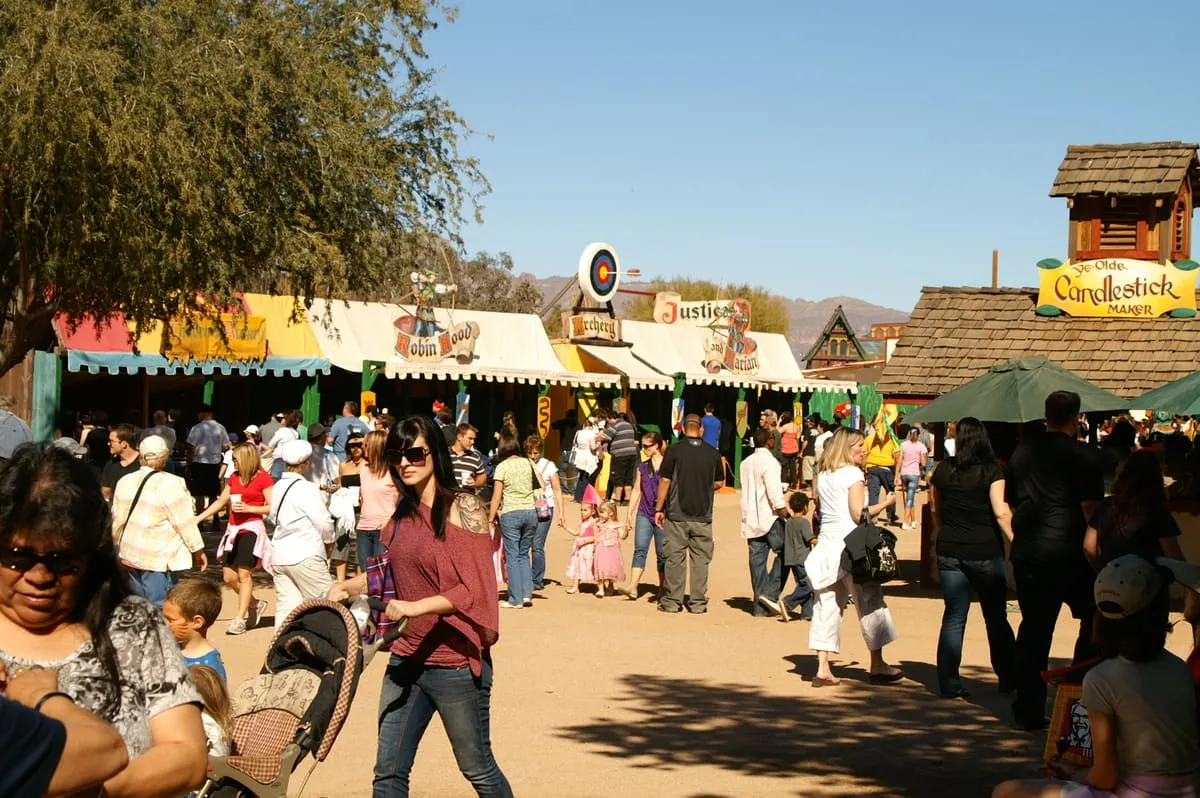
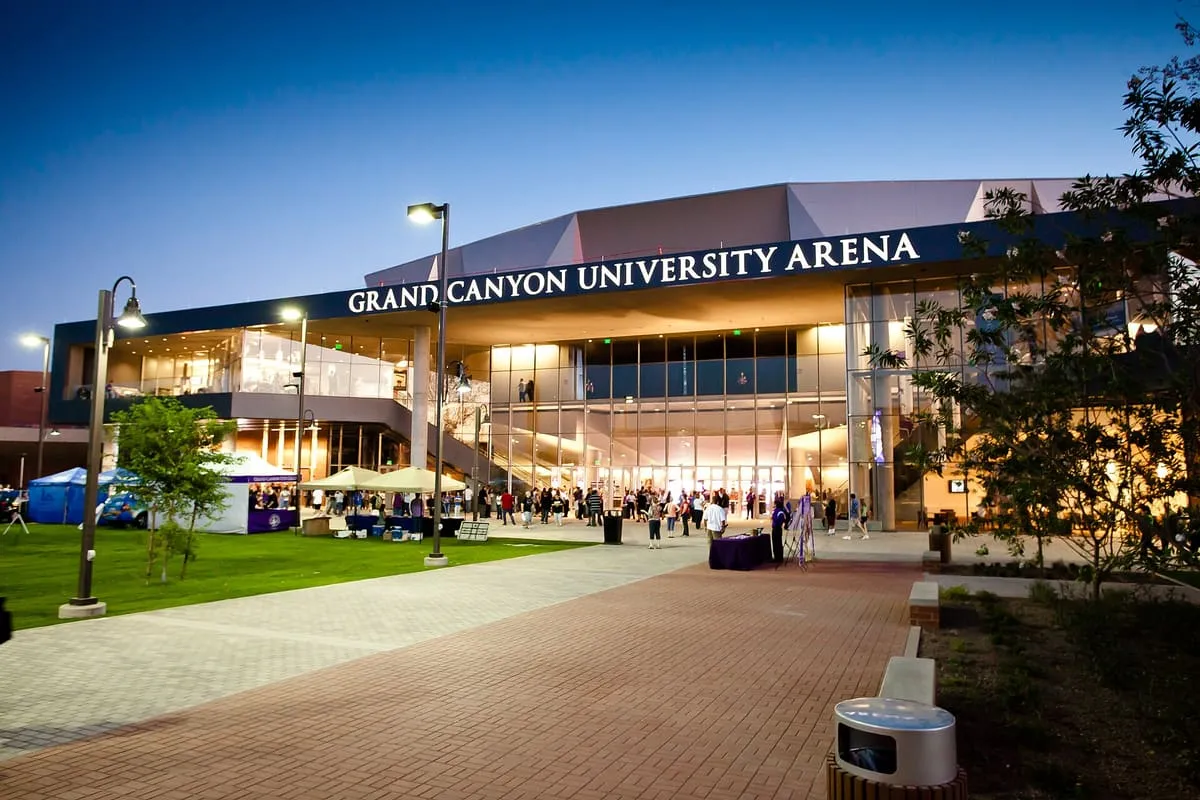
Five of those thirteen March peaks are not ballparks, and three of them sit above every ballpark but two. Global Credit Union Arena at Grand Canyon University reaches 3.55 on a basketball and volleyball calendar; the Arizona Renaissance Festival in Gold Canyon reaches 3.50, running from mid-winter to early spring on a season its organisers chose for the weather; and Phoenix Raceway reaches 3.41.
March in Arizona is the month the calendar of scheduled events concentrates in, and baseball is the largest single component of it rather than the whole.
Not one of the ten active spring training venues publishes an annual attendance figure that this database can record, which is why none of them appears in the most visited ranking. Individual figures do surface in the sources: the Cubs drew more than 200,000 spectators to Sloan Park in each of its first six seasons and again in 2023, including a Cactus League record of 250,893 in 2019. Those are club and league figures for particular seasons rather than an annual venue count of the kind the National Park Service and the Arizona State Parks system publish, and this site does not promote one into the other.
The consequence is set out on the methodology page: a record with public interest but no official count is scored on what is known and capped below the places whose visits were actually counted. The ballparks are a clean example of the case those rules were written for.
The index is derived from monthly Wikipedia readership, compared across whole calendar years — 2023, 2024 and 2025 for most records. It measures when a place is looked up. It does not measure when a place is busy, and it is not a recommendation about when to go; the two correlate, and the difference is the sort of thing a database should not quietly discard.
Landmark
Landmark
Landmark
Landmark
Landmark
Landmark
Landmark
Landmark
Landmark
Landmark
Landmark
Landmark
Landmark
Landmark
Landmark
Landmark